Visualizing Electoral Divide: Interactive Map of Red and Blue States
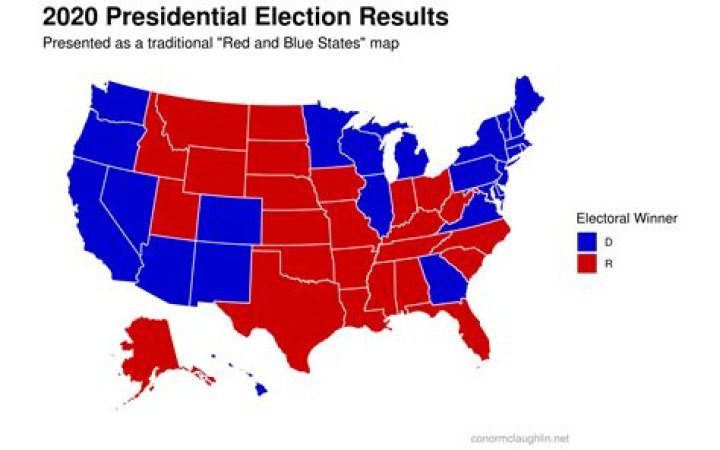
What do we understand by "map of red and blue states"?
A map of red and blue states is a visual representation of the political affiliation of different states in the United States. Red states are typically associated with the Republican Party, while blue states are typically associated with the Democratic Party. These maps are often used to illustrate the geographical distribution of political power in the United States and how different regions of the country are politically aligned.
There are a number of factors that can influence the political affiliation of a state, including its history, demographics, and economic conditions. For example, states with a large rural population are more likely to be red, while states with a large urban population are more likely to be blue. Additionally, states with a high percentage of white voters are more likely to be red, while states with a high percentage of minority voters are more likely to be blue.
Maps of red and blue states can be used for a variety of purposes, including:
- Understanding the political landscape of the United States
- Predicting the outcome of elections
- Identifying swing states
- Analyzing the relationship between politics and geography
map of red and blue states
The United States is a politically diverse country, with a wide range of opinions on a variety of issues. This diversity is reflected in the way that the country votes in elections. In recent years, the United States has become increasingly polarized, with the Republican and Democratic parties becoming more distinct in their platforms and their bases of support. This polarization has led to the creation of a "map of red and blue states," in which certain states are consistently associated with one party or the other.
There are a number of factors that contribute to the political divide between red and blue states. One factor is geography. States in the Northeast and West Coast are more likely to be blue, while states in the South and Midwest are more likely to be red. This is due in part to the different histories and economies of these regions. The Northeast and West Coast have a long history of immigration and industrialization, while the South and Midwest have a more rural and agricultural history.
Another factor that contributes to the political divide is demographics. Blue states tend to have a higher percentage of college-educated voters, while red states tend to have a higher percentage of white voters. This is due in part to the fact that college-educated voters are more likely to be liberal, while white voters are more likely to be conservative.
The political divide between red and blue states has a number of implications for the United States. One implication is that it makes it more difficult for the government to pass legislation. This is because bills that are passed by one party are often opposed by the other party. Another implication is that it makes it more difficult for the country to address national problems. This is because the two parties often have different priorities and solutions to problems.
Challenges and Controversies
The map of red and blue states has been criticized by some for being too simplistic. Critics argue that the map does not take into account the political diversity within states. For example, there are many red states that have large blue cities, and vice versa. Additionally, the map can change over time, as the political affiliation of states can change from one election to the next.
Despite these criticisms, the map of red and blue states remains a useful tool for understanding the political landscape of the United States. The map can help us to identify trends and patterns in voting behavior, and it can help us to predict the outcome of elections.
Conclusion
The map of red and blue states is a powerful tool for understanding the political landscape of the United States. The map can help us to identify trends and patterns in voting behavior, and it can help us to predict the outcome of elections. However, it is important to remember that the map is not perfect. It is a simplification of a complex reality, and it does not take into account all of the factors that can influence voting behavior.
map of red and blue states
A map of red and blue states is a visual representation of the political affiliation of different states in the United States. Red states are typically associated with the Republican Party, while blue states are typically associated with the Democratic Party. These maps are often used to illustrate the geographical distribution of political power in the United States and how different regions of the country are politically aligned.
- Geography: Red states tend to be located in the South and Midwest, while blue states tend to be located in the Northeast and West Coast.
- Demographics: Red states tend to have a higher percentage of white voters, while blue states tend to have a higher percentage of minority voters.
- Education: Blue states tend to have a higher percentage of college-educated voters, while red states tend to have a higher percentage of voters without a college degree.
- Urbanization: Blue states tend to be more urban, while red states tend to be more rural.
- Income: Blue states tend to have a higher median income than red states.
- Political polarization: The United States has become increasingly polarized in recent years, with the Republican and Democratic parties becoming more distinct in their platforms and their bases of support. This polarization has led to the creation of a "map of red and blue states," in which certain states are consistently associated with one party or the other.
These are just a few of the key aspects that can influence the political affiliation of a state. The map of red and blue states is a complex and ever-changing phenomenon, and there is no single explanation for why certain states are red and others are blue. However, by understanding the key aspects that contribute to the political divide, we can better understand the political landscape of the United States.
Geography
The geographic distribution of red and blue states in the United States is a complex phenomenon that has been shaped by a number of factors, including history, demographics, and economics. One of the most important factors is geography. States in the Northeast and West Coast are more likely to be blue, while states in the South and Midwest are more likely to be red.
- Historical factors: The Northeast and West Coast have a long history of immigration and industrialization, while the South and Midwest have a more rural and agricultural history. This has led to different political cultures in these regions. The Northeast and West Coast are more likely to be home to large, diverse populations, which tend to be more liberal. The South and Midwest are more likely to be home to smaller, more homogeneous populations, which tend to be more conservative.
- Demographic factors: The Northeast and West Coast have a higher percentage of college-educated voters, while the South and Midwest have a higher percentage of white voters. College-educated voters are more likely to be liberal, while white voters are more likely to be conservative. This is one of the reasons why the Northeast and West Coast are more likely to be blue, while the South and Midwest are more likely to be red.
- Economic factors: The Northeast and West Coast have more diversified economies, while the South and Midwest are more dependent on agriculture and manufacturing. This has led to different economic interests in these regions. The Northeast and West Coast are more likely to be home to high-tech industries and service-sector jobs, which tend to be more liberal. The South and Midwest are more likely to be home to blue-collar jobs, which tend to be more conservative.
The geographic distribution of red and blue states has a number of implications for the United States. One implication is that it makes it more difficult for the government to pass legislation. This is because bills that are passed by one party are often opposed by the other party. Another implication is that it makes it more difficult for the country to address national problems. This is because the two parties often have different priorities and solutions to problems.
Demographics
Demographics play a significant role in shaping the political landscape of the United States. One of the most important demographic factors is race. Red states tend to have a higher percentage of white voters, while blue states tend to have a higher percentage of minority voters. This is due to a number of factors, including historical patterns of migration and settlement, as well as differences in economic and social conditions.
- Historical patterns: The United States has a long history of racial segregation and discrimination. This has led to the creation of distinct racial and ethnic enclaves in many parts of the country. For example, the South has a long history of racial segregation, which has led to a high concentration of African American voters in the region. Similarly, the Southwest has a large Hispanic population, which has led to a high concentration of Hispanic voters in the region.
- Economic and social conditions: Economic and social conditions can also influence racial and ethnic voting patterns. For example, white voters are more likely to be homeowners, which gives them a vested interest in maintaining the status quo. They are also more likely to be employed in high-paying jobs, which gives them a stake in the economy. Minority voters, on the other hand, are more likely to be renters and to be employed in low-paying jobs. This can make them more likely to support government programs that provide assistance to low-income families.
The racial and ethnic composition of a state can have a significant impact on its political culture. For example, states with a high percentage of white voters are more likely to be conservative, while states with a high percentage of minority voters are more likely to be liberal. This is because white voters are more likely to support policies that benefit the wealthy, while minority voters are more likely to support policies that benefit the poor. As a result, the racial and ethnic composition of a state can have a significant impact on the policies that are enacted by the state government.
Education
The educational attainment of a state's population is a key factor in determining its political leanings. Blue states tend to have a higher percentage of college-educated voters, while red states tend to have a higher percentage of voters without a college degree. This is due to a number of factors, including the different economic and social conditions in blue and red states.
- Economic factors: College-educated voters are more likely to be employed in high-paying jobs and to have a higher income. This gives them a vested interest in maintaining the status quo and supporting policies that benefit the wealthy. Voters without a college degree, on the other hand, are more likely to be employed in low-paying jobs and to have a lower income. This makes them more likely to support government programs that provide assistance to low-income families and to favor policies that promote economic equality.
- Social factors: College-educated voters are more likely to be exposed to a diversity of ideas and perspectives. This makes them more likely to be tolerant of different viewpoints and to support policies that promote social justice. Voters without a college degree, on the other hand, are more likely to be isolated from different viewpoints and to be more resistant to change. This makes them more likely to support policies that maintain the status quo and to oppose policies that promote social change.
The educational attainment of a state's population can have a significant impact on its political culture. For example, states with a high percentage of college-educated voters are more likely to be liberal, while states with a high percentage of voters without a college degree are more likely to be conservative. This is because college-educated voters are more likely to support policies that benefit the wealthy and promote social justice, while voters without a college degree are more likely to support policies that maintain the status quo and oppose social change.
Urbanization
Urbanization is a key factor in determining the political leanings of a state. Blue states tend to be more urban, while red states tend to be more rural. This is due to a number of factors, including the different economic and social conditions in urban and rural areas.
One of the most important factors is economics. Urban areas are more likely to have a diversified economy, with a mix of industries and services. This creates a more stable economy and leads to higher incomes for residents. Rural areas, on the other hand, are more likely to be dependent on a single industry, such as agriculture or mining. This can lead to a more volatile economy and lower incomes for residents.
Another important factor is social conditions. Urban areas are more likely to be diverse, with people from different backgrounds and cultures living together. This can lead to a more tolerant and open-minded population. Rural areas, on the other hand, are more likely to be homogeneous, with people from similar backgrounds and cultures living together. This can lead to a more conservative and closed-minded population.
The urbanization of a state can have a significant impact on its political culture. For example, urban areas are more likely to be liberal, while rural areas are more likely to be conservative. This is because urban voters are more likely to support policies that benefit the wealthy and promote social justice, while rural voters are more likely to support policies that maintain the status quo and oppose social change.
The connection between urbanization and political affiliation is a complex one. However, it is clear that urbanization is a key factor in shaping the political landscape of the United States.
Income
Income is a key factor in determining the political leanings of a state. Blue states tend to have a higher median income than red states. This is due to a number of factors, including the different economic and social conditions in blue and red states.
- Economic factors: Blue states are more likely to have a diversified economy, with a mix of industries and services. This creates a more stable economy and leads to higher incomes for residents. Red states, on the other hand, are more likely to be dependent on a single industry, such as agriculture or mining. This can lead to a more volatile economy and lower incomes for residents.
- Education: Blue states tend to have a higher percentage of college-educated voters. College-educated voters are more likely to be employed in high-paying jobs and to have a higher income. Red states, on the other hand, tend to have a higher percentage of voters without a college degree. Voters without a college degree are more likely to be employed in low-paying jobs and to have a lower income.
- Urbanization: Blue states tend to be more urban, while red states tend to be more rural. Urban areas are more likely to have a diversified economy and higher incomes, while rural areas are more likely to have a single industry and lower incomes.
The connection between income and political affiliation is a complex one. However, it is clear that income is a key factor in shaping the political landscape of the United States.
Political polarization
The increasing political polarization in the United States has had a number of consequences, including the creation of a "map of red and blue states." This map is a visual representation of the political divide in the country, with red states typically being associated with the Republican Party and blue states typically being associated with the Democratic Party. The map has become a powerful tool for understanding the political landscape of the United States and for predicting the outcome of elections.
- Increased partisan sorting: One of the most visible consequences of political polarization has been the increase in partisan sorting. This is the tendency for people to move to areas where they are surrounded by others who share their political views. As a result, red states are becoming more Republican and blue states are becoming more Democratic.
- Greater ideological divide: The increasing political polarization has also led to a greater ideological divide between the two parties. Republicans and Democrats are now more distinct in their views on a wide range of issues, including the role of government, the economy, and social welfare.
- More gridlock in Washington: The increasing political polarization has made it more difficult for the two parties to find common ground and pass legislation. This has led to more gridlock in Washington and has made it more difficult to address the challenges facing the country.
The increasing political polarization in the United States is a serious problem that has a number of negative consequences. It is important to understand the causes and consequences of political polarization in order to find ways to address it.
FAQs about "map of red and blue states"
This section provides answers to frequently asked questions about the "map of red and blue states." These questions are designed to provide a comprehensive understanding of the topic and address common misconceptions.
Question 1: What is a "map of red and blue states"?
A map of red and blue states is a visual representation of the political affiliation of different states in the United States. Red states are typically associated with the Republican Party, while blue states are typically associated with the Democratic Party.
Question 2: Why are some states red and others blue?
There are a number of factors that can influence the political affiliation of a state, including its history, demographics, and economic conditions. For example, states with a large rural population are more likely to be red, while states with a large urban population are more likely to be blue. Additionally, states with a high percentage of white voters are more likely to be red, while states with a high percentage of minority voters are more likely to be blue.
Question 3: What are the implications of the red and blue state divide?
The red and blue state divide has a number of implications for the United States. One implication is that it makes it more difficult for the government to pass legislation. This is because bills that are passed by one party are often opposed by the other party. Another implication is that it makes it more difficult for the country to address national problems. This is because the two parties often have different priorities and solutions to problems.
Question 4: Is the red and blue state divide permanent?
The red and blue state divide is not permanent. The political affiliation of states can change over time, as evidenced by the fact that some states have switched from red to blue and vice versa in recent years.
Summary: The map of red and blue states is a useful tool for understanding the political landscape of the United States. However, it is important to remember that the map is not perfect and that the political affiliation of states can change over time.
Conclusion
The map of red and blue states is a powerful tool for understanding the political landscape of the United States. It can help us to identify trends and patterns in voting behavior, and it can help us to predict the outcome of elections. However, it is important to remember that the map is not perfect. It is a simplification of a complex reality, and it does not take into account all of the factors that can influence voting behavior.
Despite its limitations, the map of red and blue states remains a valuable tool for understanding American politics. It can help us to see the different ways that people in different parts of the country think about politics, and it can help us to understand the challenges that we face as a nation. As the country continues to change, so too will the map of red and blue states. It is important to stay informed about these changes so that we can better understand the political landscape of the United States.